 0 ITEMS IN CART

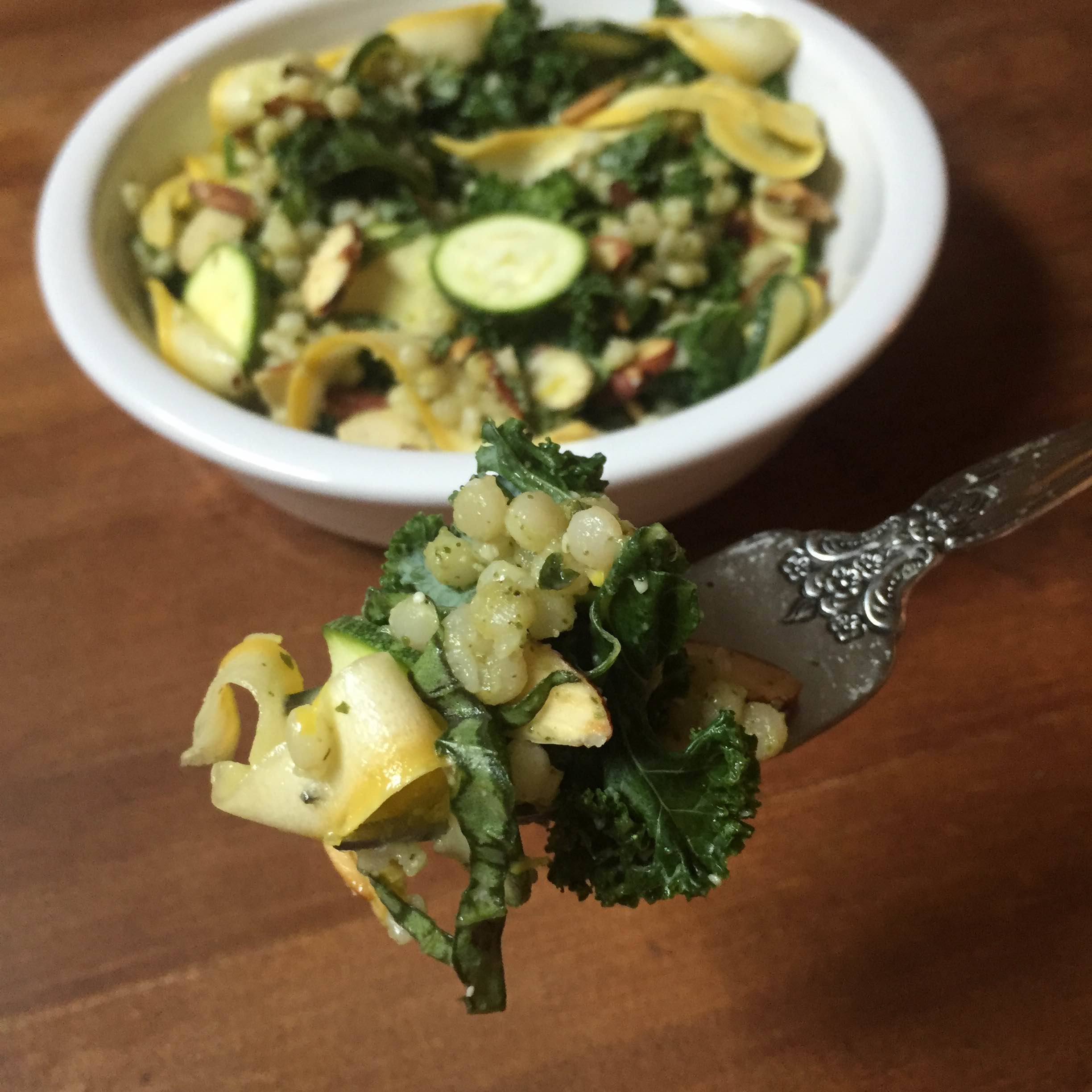
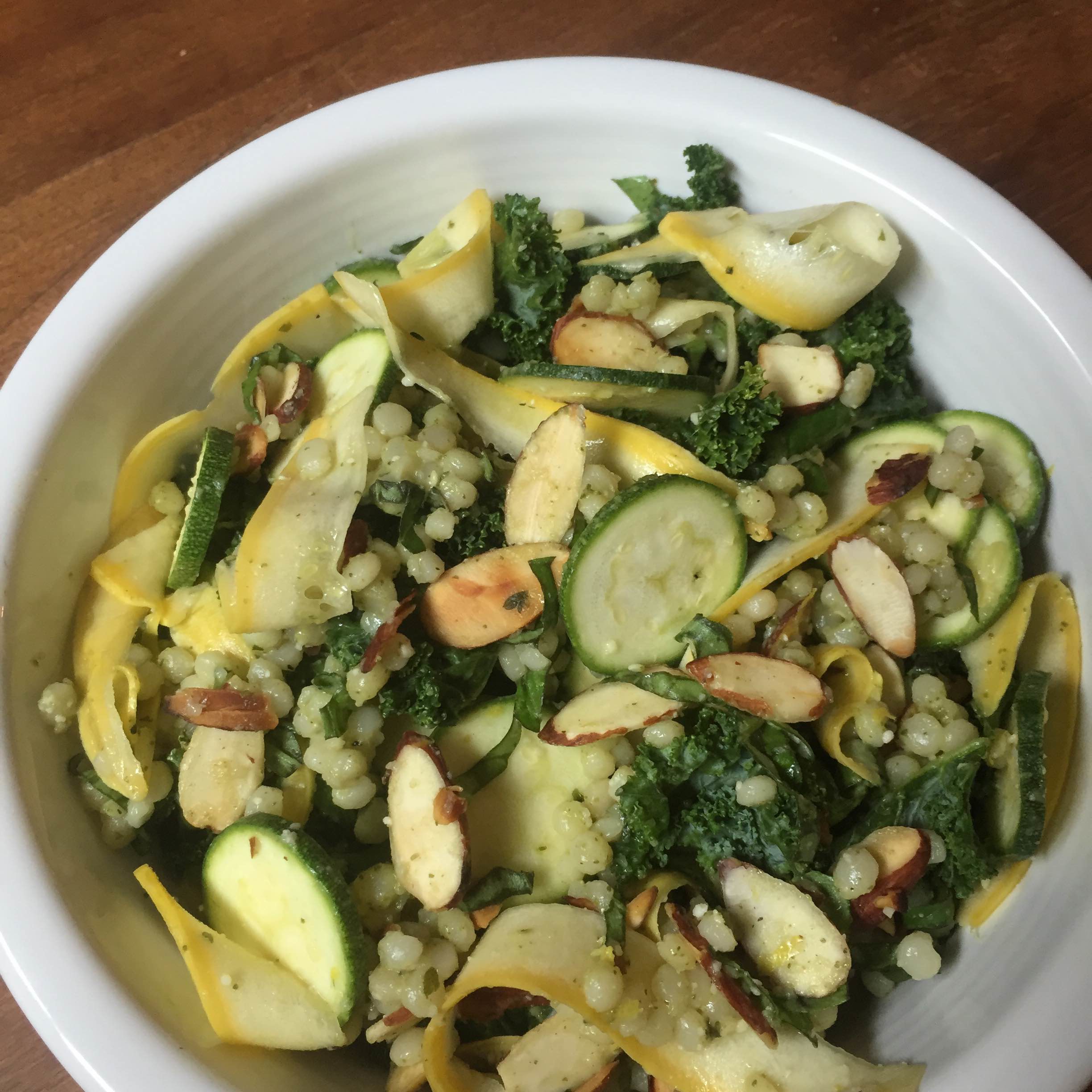
HERBED SUMMER SQUASH & PEARL PASTA SALAD
05/24/16 — Farm
 by Megan Winfrey
Holy humid! Did someone kidnap me in my sleep and move me to Houston? Although we've been miserably sweaty and mostly bound to the house all week, we're always thankful for rain and can't wait to enjoy the greenbelt once the sun returns! In the meantime, we'll be eating our produce raw and cold. This recipe is perfect for this sweltering, heavy heat and it is also super delicious and healthy! I'm going to be making this all summer.
Herbed Summer Squash & Pearl Pasta Salad
- 2 zucchini, sliced into thin rounds
- 1 yellow squash, sliced into ribbons
- 1 box Basil & Herb Pearled Couscous
- 2 tbs. parmesan cheese, finely grated
- 2 tbs. lemon juice
- 1 tsp. lemon zest
- 1 tbs. rice vinegar
- 6 tbs. extra virgin olive oil
- 2 cups shredded kale leaves
- 1/2 cup slivered almonds, toasted
- 1 cup basil leaves, sliced into ribbons
- salt and pepper
 Prepare the Pearled Couscous according to the instructions. Set aside and let cool.
Use a sharp knife or mandolin to slice the squash. I don't have a mandolin, so I used a sharp knife for the rounds and my vegetable peeler for the ribbons.
In a large bowl, combine the couscous, squash, kale, basil, and toasted almonds.
Whisk together the parmesan, lemon juice, zest, and vinegar. Slowly whisk in the olive oil and pour all over the salad. Incorporate well and top with more parmesan and lemon juice if desired. Salt and pepper to taste.
Serve warm or refrigerate and enjoy all week.
CSA BOX CONTENTS WEEK OF MAY 23RD
05/24/16 — Scott
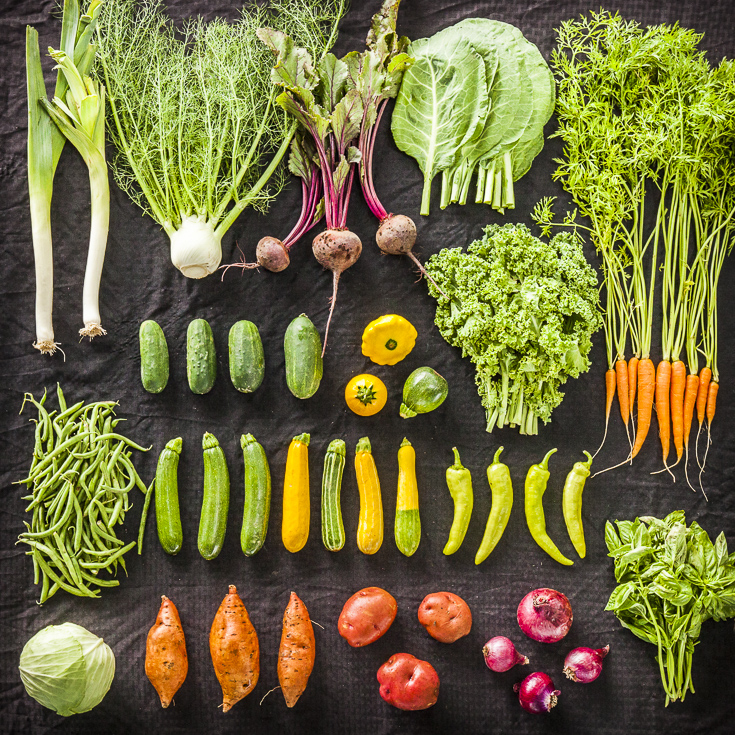 CSA Box Contents Week of May 23rd
Large Box
Bean, Green
Beet, Red
Cabbage, Red
Carrot, Orange
Cucumber, Pickling
Greens, Collards
Greens, Kale, Curly
Herb, Basil
Herb, Fennel
Onion, Red
Pepper, Banana
Potato, Red
Squash. Summer Medley
Bean, Green
Beet, Red
Cabbage, Red
Carrot, Orange
Cucumber, Pickling
Greens, Collards
Greens, Kale, Curly
Herb, Basil
Herb, Fennel
Onion, Red
Pepper, Banana
Potato, Red
Squash. Summer Medley
Medium Box
Bean, Green
Beet, Red
Cabbage, Red
Carrot, Orange
Greens, Kale, Curly
Herb, Basil
Herb, Fennel
Onion, Red
Potato, Red
Squash. Summer Medley
Bean, Green
Beet, Red
Cabbage, Red
Carrot, Orange
Greens, Kale, Curly
Herb, Basil
Herb, Fennel
Onion, Red
Potato, Red
Squash. Summer Medley
Small Box
Bean, Green
Cabbage, Red
Carrot, Orange
Greens, Collards
Herb, Fennel
Leek
Potato, Sweet
Squash. Summer Medley
Bean, Green
Cabbage, Red
Carrot, Orange
Greens, Collards
Herb, Fennel
Leek
Potato, Sweet
Squash. Summer Medley
Individual Box
Bean, Green
Cabbage, Red
Carrot, Orange
Cucumber, Pickling
Greens, Kale, Curly
Squash. Summer Medley
Bean, Green
Cabbage, Red
Carrot, Orange
Cucumber, Pickling
Greens, Kale, Curly
Squash. Summer Medley
TOTALLY TOMATOES!
05/20/16 — Farm
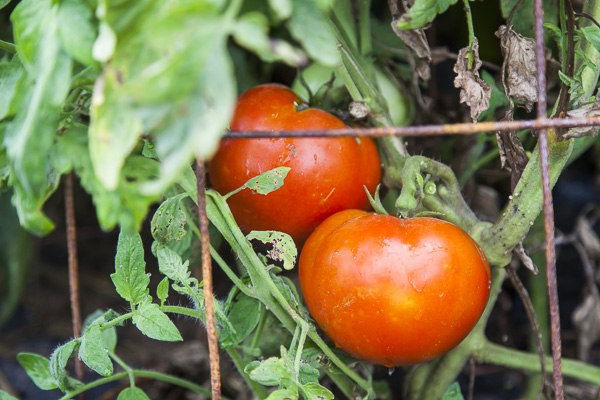 Photo by Scott David Gordon
You know summer is here when... tomatoes start coming in! We wanted to write a blog post celebrating this little bundle of summer flavor - the tomato certainly has a unique and colorful history, spanning continents and centuries!We just harvested our first ripe, juicy Juliet tomatoes for the SFC Triangle Market this Wednesday, and couldn't be more excited that tomato season is finally here. So here's to you, Solanum lycopersicum, for brightening up a rainy week here at JBG.
History
Wild cultivars of the tomato originated in South America - what is today Peru, Bolivia, Chile and the other Andean nations. Native tomato plants produced small, cherry-sized fruit that likely ripened to yellow (not red!). Though it was used as a food product, the tomato was not an important crop and was one of the last Solanum family plants (other include chili peppers, potatoes, and tobacco) to be brought north to Central America during cultural migrations. To this day, a number of wild tomato cultivars can still be found growing across South America!The Aztec culture is credited with domesticating the tomato and incorporating it into their cuisine - way back in 500 BC. The tomato lived a fruitful, but quiet life until the sack of the Aztec capital Tenochtitlan by Hernan Cortez in 1521. Tomato seeds, among many other treasures, made it back to Europe following the seizing of the city. This jet-set really opened the doors for the future of tomatoes as a global food crop.

Across the Atlantic, the tomato underwent extensive breeding, most notably by the Italians, who created new varieties with all kinds of wonderful colors, shapes, and sizes - these fruits probably looked like what we call "heirlooms" today. Interestingly enough, these fruits were first bred as ornamentals, not as a food source! The first appearance of tomatoes in a European cookbook were published in Naples, Italy in 1692.
And who better to bring the glorious tomato back to America than Thomas Jefferson? The Jeffersons grew and bred tomatoes at Monticello, and along with a few other American botanists - most notably a man names Alexander Livingston, the number of tomatoes varieties around the world grew into the thousands! Jeffrey Campbell is another big player in the tomato game, making it a staple in the American household with his condensed tomato soup idea - he wanted to save money on shipping by removing some of the water weight, resulting in the iconic Campbell's Tomato Soup can.
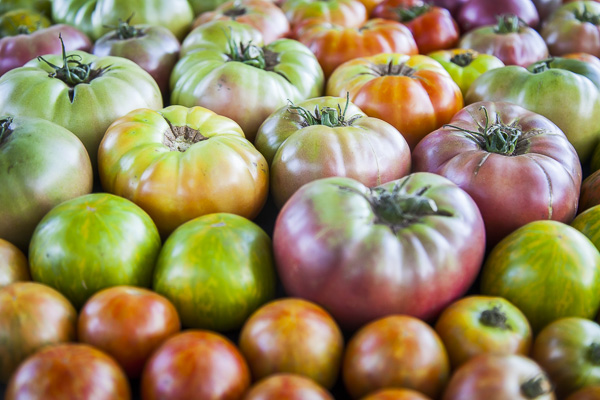 Photo by Scott David Gordon
Folklore
There are loads of myths, legends, and stories centered around the tomato. The Pueblo nation believed that those who ingested the seeds of a tomato would be given powers of divination, while many people in colonial times believed tomatoes to be poisonous fruits. It was said that eating the fruit of a tomato plant would turn one's blood to acid. Sounds nasty! This misconception may have come from the fact that many toxic members of the nightshade family - mandrake, belladona, and poison nightshade - all look like their cousin, the tomato.You can't keep a good veggie down though, and by the late 16th century, tomatoes were recognized as not just nonpoisonous, but delicious! The tomato earned a reputation as an aphrodisiac, with nicknames such as pomme d'amour - French for "love apple." In the 1920s, beautiful women were sometimes referred to by the slang phrase "hot tomato."
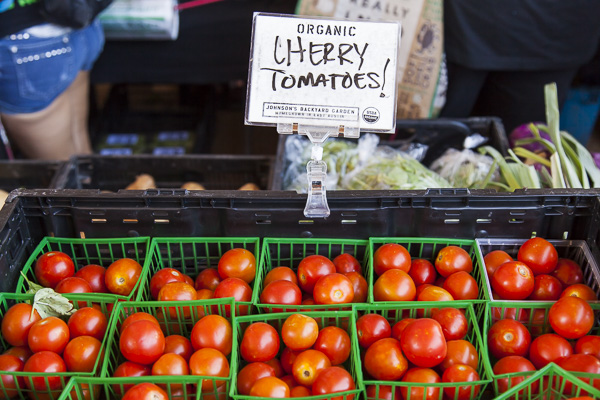 Photo by Scott David Gordon
Heirlooms, Hybrids, and more!
With literally thousands of cultivars all over the world, how does one decide how to grow the best tomato? Heirloom tomatoes are famous for having much better flavor (and beautiful shapes and colors) compared with most commercial varieties. Why is that? A natural gene mutation resulted in the "u" gene - u for uniformly ripening. Once discovered, it was bred into some commercial varieties for that perfect, all-red tomato you see at big-box grocery stores that taste like cardboard. Unfortunately, tomatoes with this trait also produce less sugar, by about 10-15%.Luckily, lots of tomatoes with better flavor exist - in reds, purples, yellows and more! If you want to save seed from your home tomatoes, be sure to get an heirloom, or at least an "open-pollinated" variety, as their offspring will look the same as the parent plant. If you buy new seeds from year to year, also consider browsing hybrid varieties - botanists cross-pollinate tomatoes to produce varieties with amazing traits - flavor, sweetness, vigorous growth, disease resistance and more. Some breeders are currently working on increasing disease resistance by hybridizing modern-day favorites with wild Andean cultivars - a plant's way of saying that [great-great-great-great-great-great-great-grand-]mother knows best!
Bonnie Plants has a great explanation of the differences between heirlooms, hybrids, and genetically modified varieties that's worth a read.
Heirloom Varieties:
- Cherokee Purple (read NPR's story of this tomato!)
- Yellow Pear - a gorgeous cherry
- Striped German - big, yellow and red beefsteak
- Amish Paste - the best sauce tomato
- Sungold - everyone's favorite cherry.
- Big Beef - a red hybrid tomato that has definitely been bred for great flavor!
- Lemon Boy - cute, round salad tomatoes in a great shade of yellow
 Photo by Scott David Gordon
Fun Facts
Why do we call tomatoes a vegetable, when they are really a fruit? You might blame the Supreme Court - in 1887, Nix v. Hedden determined that tomatoes should be subject to the 10% vegetable tariff that importer John Nix was protesting by importing this exotic "fruit".In Arkansas, the tomato is both the state fruit AND the state vegetable!
Those hairs on the stems of your tomatoes? Each one has the potential to turn into a root if the stem is placed on the ground. This is why gardeners are encouraged to plant their tomatoes deep.
The town of Buñol, Spain, hosts an annual festival culminating in a giant tomato fight, called La Tomatina.
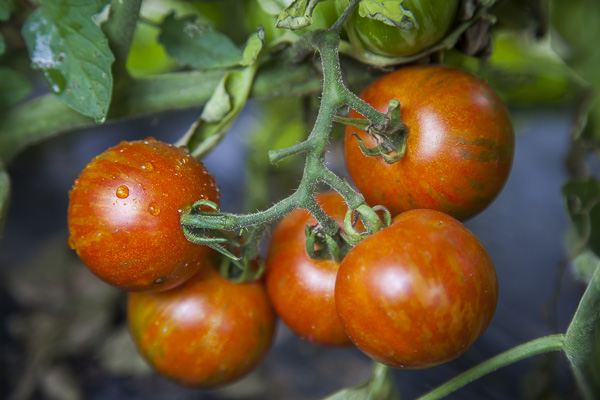 Photo by Scott David Gordon
Be on the look out the week of June 1st for our annual Tomato Sale to get rolling! We'd love to hear what you're planning on doing with this year's bounty - sauces? Salsa? Chutney? Let us know! And let's all hope this rain slows up - we need the heat units to ripen up these tomatoes, stat!
WEEK 20 IN PHOTOS
05/20/16 — Farm
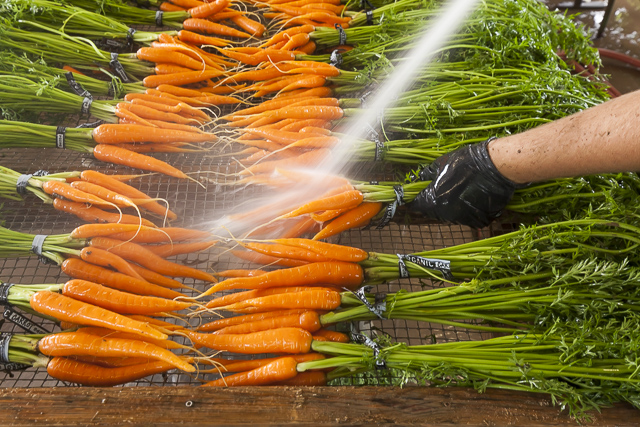 Washing carrots for market this weekend. Photo by Scott David Gordon
The farm is a muddy mess this week! We got so much rain on Thursday that we had to sent everyone home by 9am. We're working odd hours to make sure everything gets ready for market this weekend - let's hope the sun comes out soon! We could definitely use some sunshine and heat to dry out and warm up our tomato plants - we are a little bit worried that the fruits won't have enough heat to turn red as soon as we would like. Summer really is here now, and we're harvesting tomatoes alongside the first okra, sweet and hot peppers, and loads more summer squash!
Our greenhouses are now leveled to the ground. We should be able to salvage the vents and fans, but everything else will need replacing. This is going to be a huge cost to the farm - if you want to help us in this time of need, please read our post on the issue. If that wasn't enough, our green bean picker broke this week, right as the bean harvest came ready! Our harvest crew is truly amazing, and have been picking beans by hand all week. A huge thanks to the crew for their dedication!
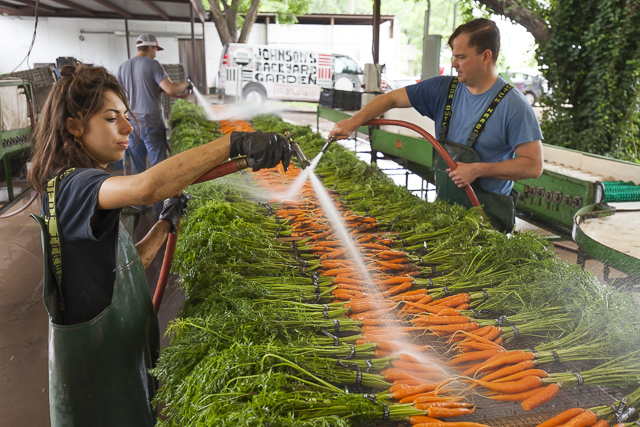 Our barn crew washing lots of carrots. Photo by Scott David Gordon
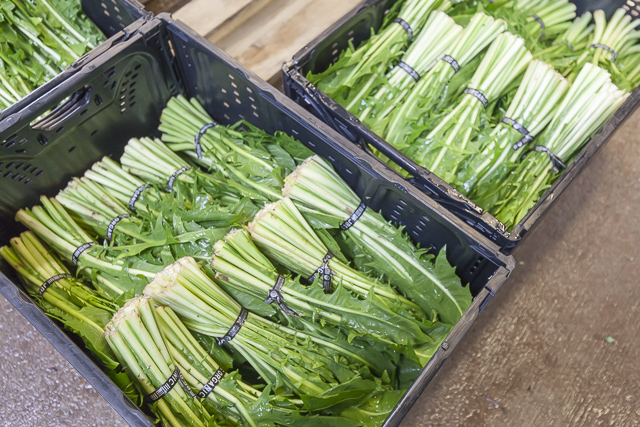 Bins of dandelion greens. Photo by Scott David Gordon
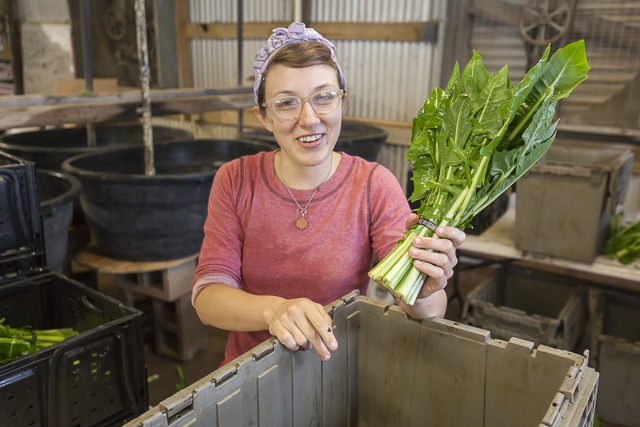 Kayla shows off a beautiful bunch of dandelion greens. Photo by Scott David Gordon
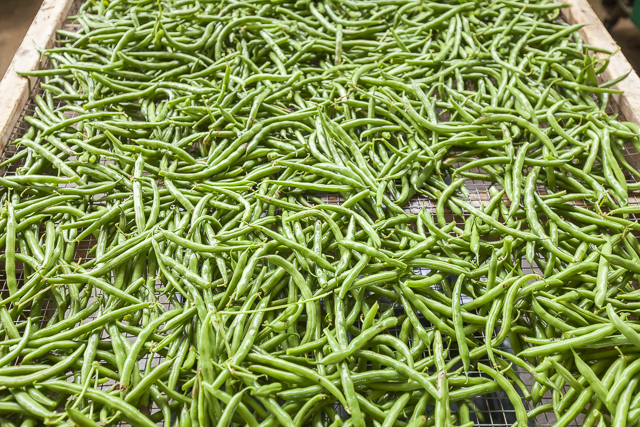 Green beans! Photo by Scott David Gordon
 Sorting and washing green beans at the barn. Photo by Scott David Gordon
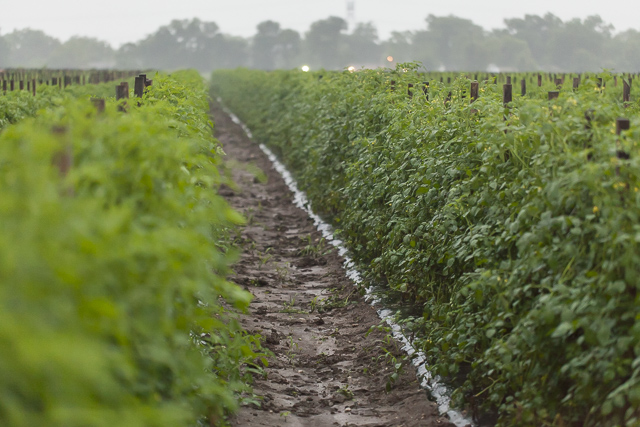 It's a muddy day in the fields, let's hope the sun comes out to ripen these tomatoes soon! Photo by Scott David Gordon
 Lots of tomatoes are coming! Photo by Scott David Gordon
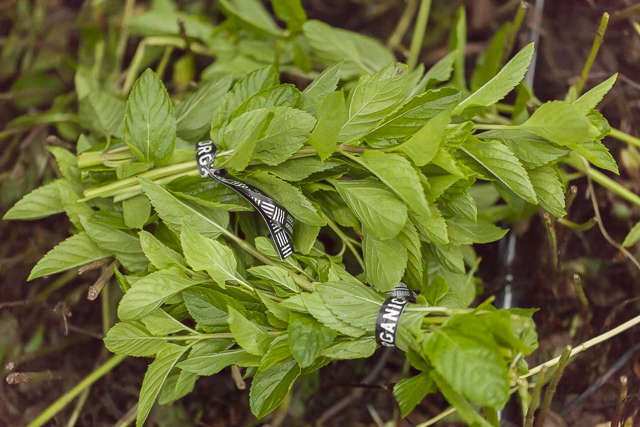 Bunched mint in the field. Photo by Scott David Gordon
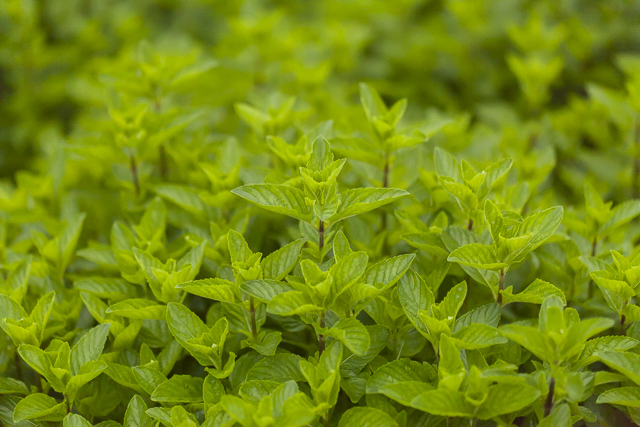 The mint really loves the rain, though! Photo by Scott David Gordon
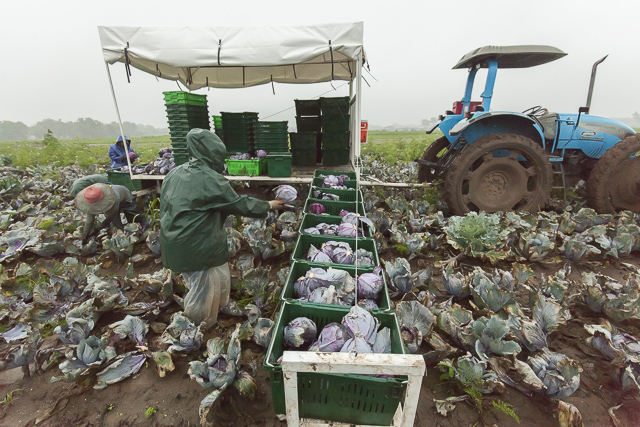 Our new, COVERED, harvest trailer helps the crew harvest cabbage. Photo by Scott David Gordon
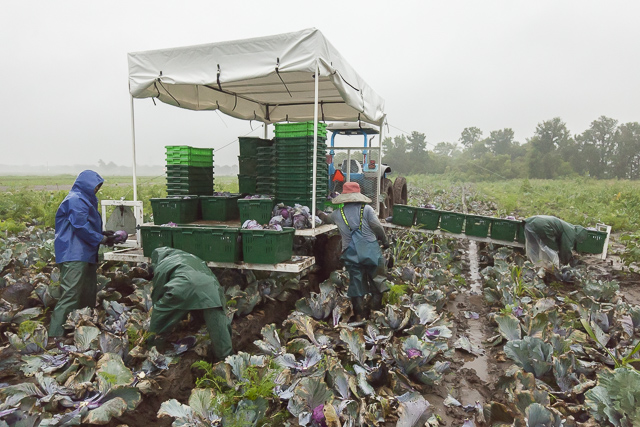 Photo by Scott David Gordon
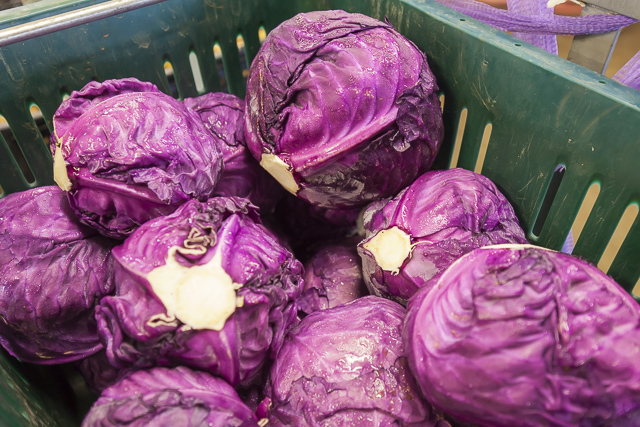 Purple cabbage is in season right now. Photo by Scott David Gordon
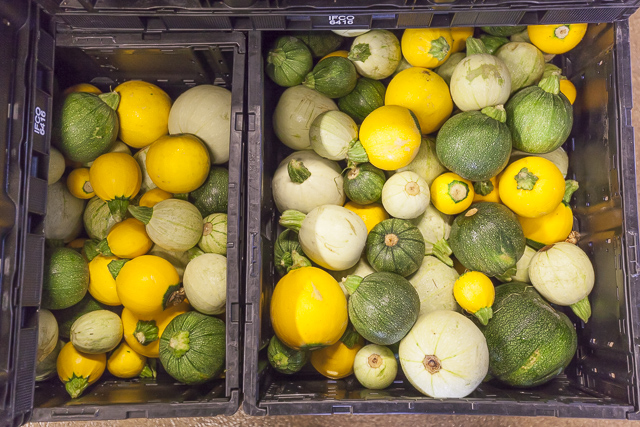 Our summer squash harvest is rolling in - we've got them in all colors and shapes! Photo by Scott David Gordon
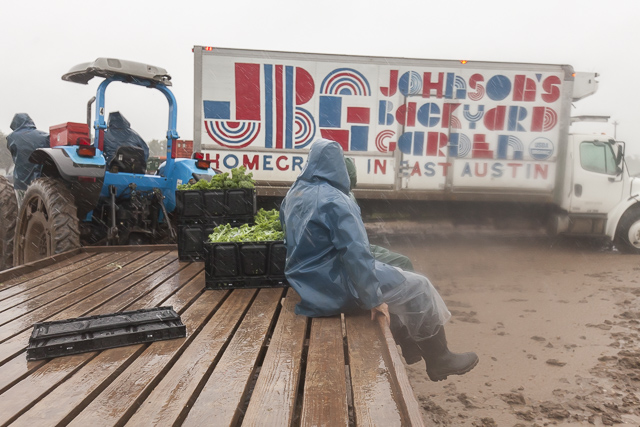 Thanks to the crew for braving the rains this week! Photo by Scott David Gordon
BRUSSELS SPROUTS STUFFED POTATOES
05/19/16 — Farm
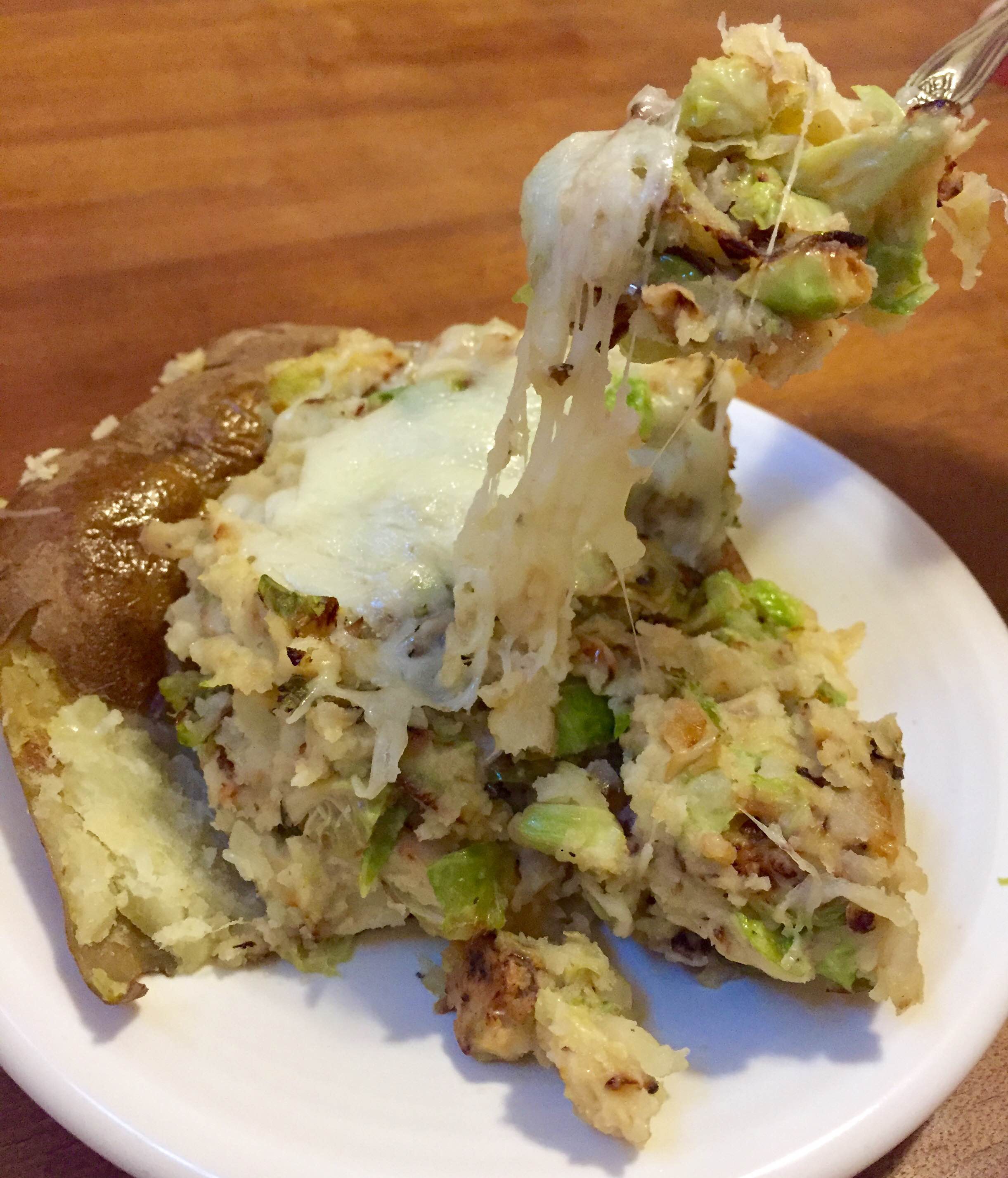 by Megan Winfrey
I'm a big fan of the loaded potato. So versatile and easy to make, I could have one for dinner any night of the week and be an extremely happy woman. But I'll admit, I haven't looked outside of the box much with this dish - I tend to go for the old classics like chili or pulled pork, sour cream, chives, etc. This recipe is genius in that it is a total party for your tastebuds and it's not what you'd normally expect from a loaded potato. Get ready to add this one to your weekly roster.
Brussels Sprouts Stuffed Potatoes
- 2 large russet potatoes
- 1 box of JBG brussels sprouts
- 1 small onion, diced
- 3 cloves of garlic, minced
- 1/4 cup ranch dressing
- 1/2 cup mozzarella cheese, shredded
- 1 tbs. butter
- 1 tbs. olive oil
- salt and pepper
Preheat the oven the 425ºF.
Scrub the potatoes clean, wrap individually in foil, pierce with a sharp knife in several places, and bake for about 40 minutes or until tender when squeezed with an oven mitt.
While the potatoes bake, prepare the brussels sprouts by chopping off the base and removing the outer layer of leaves. Quarter each sprout and set aside.
Heat the butter in a heavy skillet over medium high heat. Add the brussels sprouts and sauté for 5 minutes. Add the onions and garlic and cook for another 5-8 minutes, until everything begins to soften up nicely.
When the potatoes are done, allow them to cool for a few minutes until you can handle them. Slice a thin layer off the top and discard. Scoop the flesh of the potatoes into a medium sized bowl - you'll end up with empty potato skins that look like canoes.
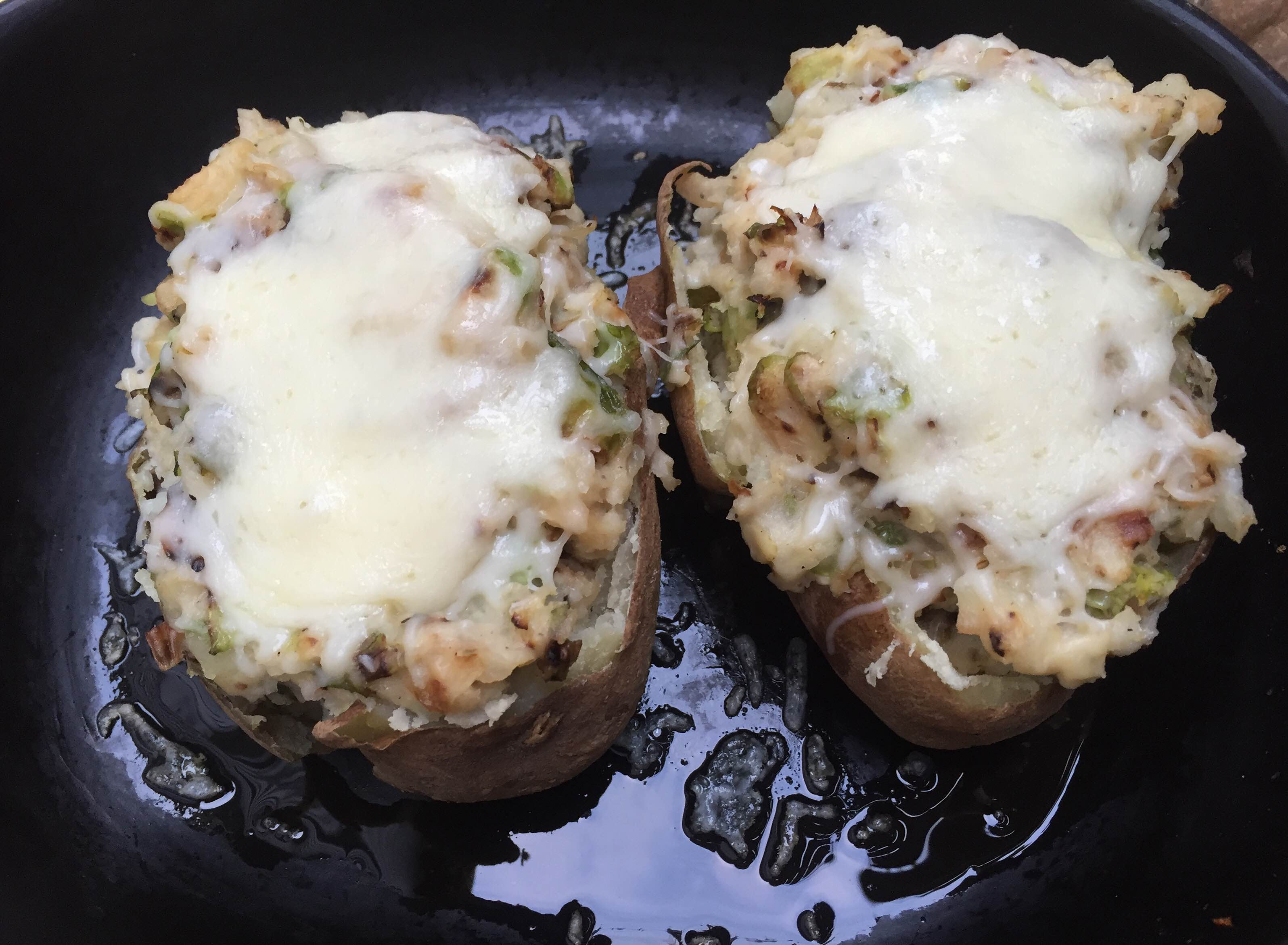
Add the brussels sprouts mixture and ranch dressing to the bowl and combine. Salt and pepper to taste.
Now, fill the potato skins with the mixture. You can really pack it in there and even let some overflow. It should all fit!
Reduce your oven to 350ºF. Top the potatoes with the mozzarella cheese and pop back into the oven until the cheese melts, about 10 minutes.
CSA BOX CONTENTS WEEK OF MAY 16TH
05/17/16 — Scott
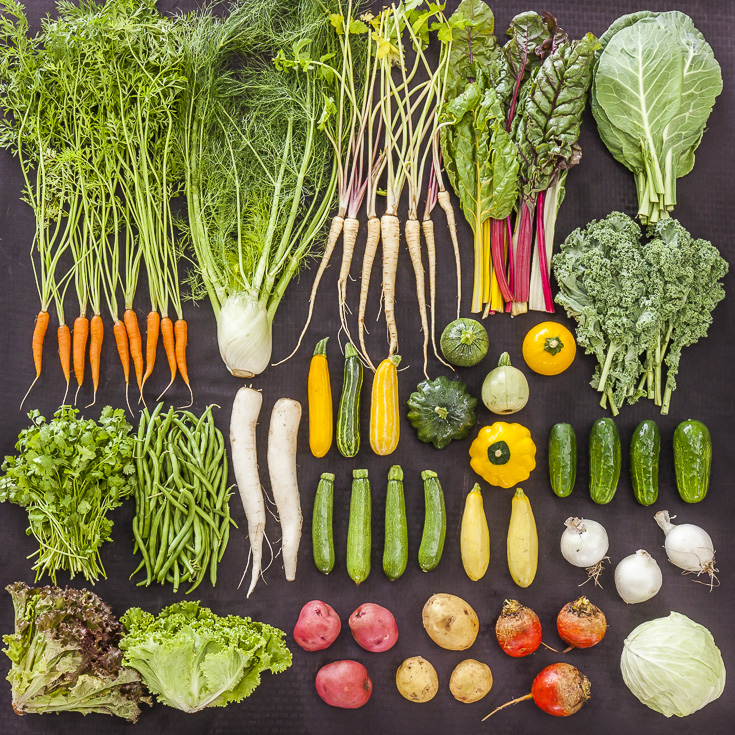 CSA Box Contents Week of May 16th
Large Box
Bean, Green
Beet, Red
Cabbage, Red
Carrot, Orange
Cucumber, Pickling
Greens, Collards
Greens, Kale, Curly
Herb, Basil
Herb, Fennel
Onion, Red
Pepper, Banana
Potato, Red
Squash. Summer Medley
Bean, Green
Beet, Red
Cabbage, Red
Carrot, Orange
Cucumber, Pickling
Greens, Collards
Greens, Kale, Curly
Herb, Basil
Herb, Fennel
Onion, Red
Pepper, Banana
Potato, Red
Squash. Summer Medley
Medium Box
Bean, Green
Beet, Red
Cabbage, Red
Carrot, Orange
Greens, Kale, Curly
Herb, Basil
Herb, Fennel
Onion, Red
Potato, Red
Squash. Summer Medley
Bean, Green
Beet, Red
Cabbage, Red
Carrot, Orange
Greens, Kale, Curly
Herb, Basil
Herb, Fennel
Onion, Red
Potato, Red
Squash. Summer Medley
Small Box
Bean, Green
Cabbage, Red
Carrot, Orange
Greens, Collards
Herb, Fennel
Leek
Potato, Sweet
Squash. Summer Medley
Bean, Green
Cabbage, Red
Carrot, Orange
Greens, Collards
Herb, Fennel
Leek
Potato, Sweet
Squash. Summer Medley
Individual Box
Bean, Green
Cabbage, Red
Carrot, Orange
Cucumber, Pickling
Greens, Kale, Curly
Squash. Summer Medley
Bean, Green
Cabbage, Red
Carrot, Orange
Cucumber, Pickling
Greens, Kale, Curly
Squash. Summer Medley
PODCASTS TO FARM TO THIS SUMMER
05/13/16 — Farm
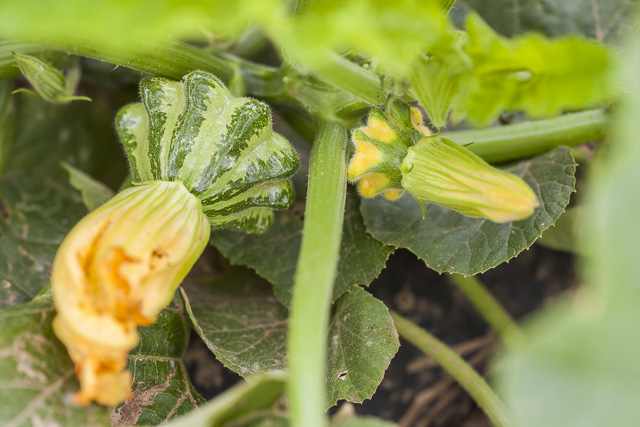 A patty-pan type squash - we're harvesting loads of interesting varieties this week. Photo by Scott David Gordon
Things are really picking up at the farm this week! We're coming into our first big flush of summer crops and everyone is remembering how much lifting we have to do here in the summertime. Summer squash (we're harvesting some cool heirloom varieties in addition to the green and yellow squash you're familiar with), green beans, cucumbers, onions, and some early tomatoes are all coming out of the fields this week. And believe us - these crops are HEAVY!
Luckily, we've just put the final touches on our harvest trailers - shaded roofs. I know I talked about these trailers a few weeks ago, but seeing them in action as the heavier summer crops come in is really an awesome sight. Instead of walking full bins of veggies to the ends of our fields, the harvest crew is now able to harvest right into their bins that are sitting on the trailer! This saves loads of lifting and carrying (something we could all use a little less of out here) and allows us to harvest up to 5 beds at a time. In addition, the shaded cover on the trailer means that we can get your produce out of the sun faster, which should improve overall quality on the farm. I just keep thinking, why didn't we build these sooner?
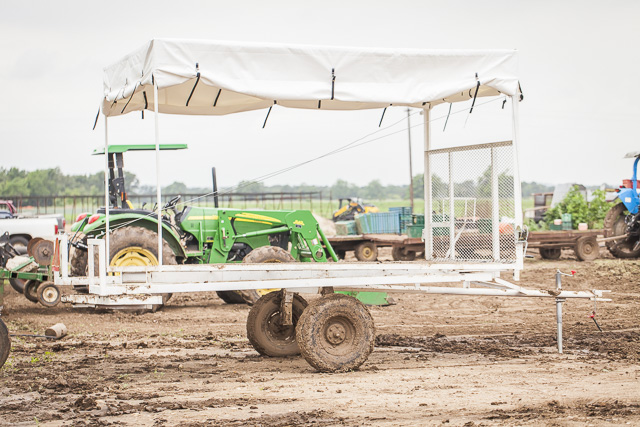 Our harvest trailers are now shaded! Photo by Scott David Gordon
We're still working to take down the steel structures that were our greenhouses until last week. Once the pads are cleared, we will be able to start rebuilding. A huge thank-you to our CSA community for your support during this time. Thanks to those who have committed for long-term CSA subscriptions with the farm, and those who have offered materials donations. We still have a lot of work ahead of us - if you can support the farm in any way as we move into a great harvest season, it would help us get these greenhouses up before we have to start seeding again in late June!
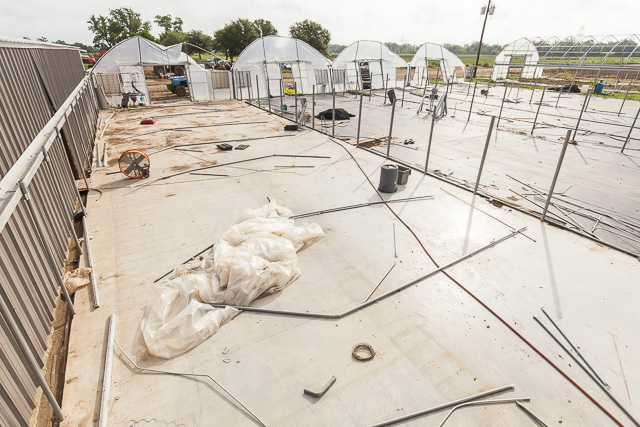 We're taking down the damaged sections of greenhouses this week. Photo by Scott David Gordon
As the workload picks up at JBG, we are all putting in the extra hours to make sure everything gets done. Some of us have found that plugging in our headphones makes the work go by faster. JBG Greenhouse Manager Brandon recently shared his list of agriculture podcasts with some of our staff, and we loved his suggestions and wanted to share them with you. Got any food/farming podcasts you like to listen to? We'd love to hear about them in the comments.
Permaculture Voices
The Permaculture Voices podcast founder Diego interviews folks in all aspects of the regenerative agriculture spectrum. This includes urban farmers, rural legends like Joel Salatin, soil experts, mycologists and more. This podcast explores the important balance between an agricultural business that cares for the earth with respect but also yields a profitable and sustainable lifestyle for the farmer. They are also a great resource for anyone interested in learning more about the principles of permaculture.
Recommended episode: Biodiverity is Biosecurity- Strengthening Foodwebs using Mycological Solutions
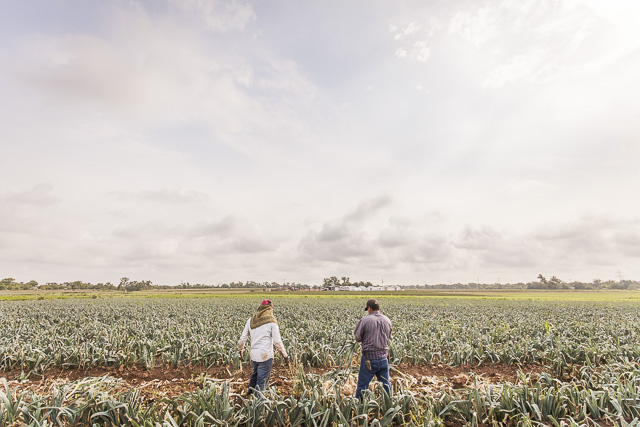 Photo by Scott David Gordon
Farmer to Farmer Podcast
Chris Blanchard's Farmer to Farmer is probably on the more technical end of this list of podcasts. Expect to hear real farmers discussing varieties, bed and row spacing, record keeping and more. Don't miss the episode a few weeks ago when Chris talked with Brenton about the farm!
Recommended episode: Eliot Coleman on the Importance of Observation, and Making the Soil Work for Your Farm
Homesteady
From hunting to mushroom foraging to building a chicken coop, this podcast explores self-sufficiency topics for the aspiring homesteader. If you've dreamt of using your backyard as a market garden, want to know how to build a chicken coop, or don't know what to do once you've shot your first whitetail, look no further than Homesteady!
Recommended episode: Can you Make Money Selling Farm Fresh Eggs? Chickens, Eggs, and Homestead Business
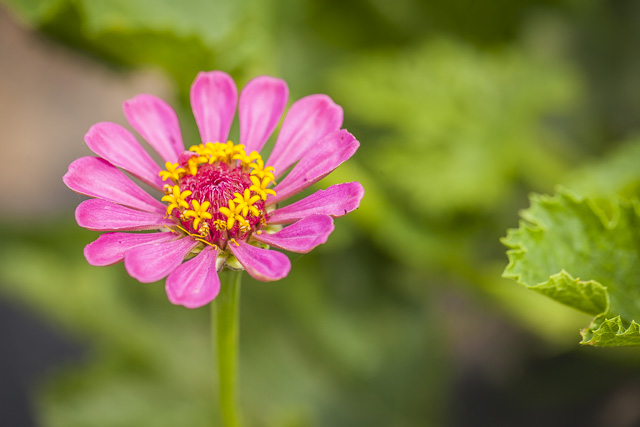 Zinnia flowering at JBG this week. Photo by Scott David Gordon
More of Brandon's favorite podcasts:
Get Growing with Farmer Fred - Backyard gardeners! Farmer Fred is a long time Master Gardener in California whose podcast is a wealth of tips for organic backyard gardeners on soils, pest management, and plenty of great tips to help your garden thrive.
Farm Marketing Solutions - Lots of small farms fail despite the fact that they are great at growing food. Farm Marketing Solutions aims to help the farmer trying to grow the business an insight into great marketing techniques.
Homesteading and Permaculture by Paul Wheaton - Tons of information on permaculture design and techniques, good conversations with a variety of guests, and an entertaining (and sometimes foul-mouthed) host.
The Urban Farm Podcast With Greg Peterson - These shorter podcasts (30-45 min) discusses topics revolving around the art of urban food production systems and the potential that exists to grow food in metropolitan areas.
Chicken Thistle Farm CoopCast - Coopcast is based at Chicken Thistle Farm in Walworth, NY. Kelli and Andi raise pigs and chickens and give advice and hilarious stories in each week's podcast.
Sow Edible Permaculture Podcast - Join first-time farmers Stacy and Amy as they build their permaculture self-sufficient farm and off grid house.
Sustainable World Radio - Jill Cloutier has been producing this show since 2004, and each week cover topics ranging from permaculture to herbal remedies. Nature-based solutions to make this world a better place.
The Beginning Farmer Show with Ethan Book - Ethan from Crooked Gap Farm tells his own entertaining story about "the good, bad, and ugly of starting a farm from scratch". His enthusiasm is contagious and his storytelling is really captivating.
We hope you enjoy this list - let us know which podcasts we missed in the comments section!